
Fermenting Apples
Why Ferment Apples? (Besides Bragging Rights)
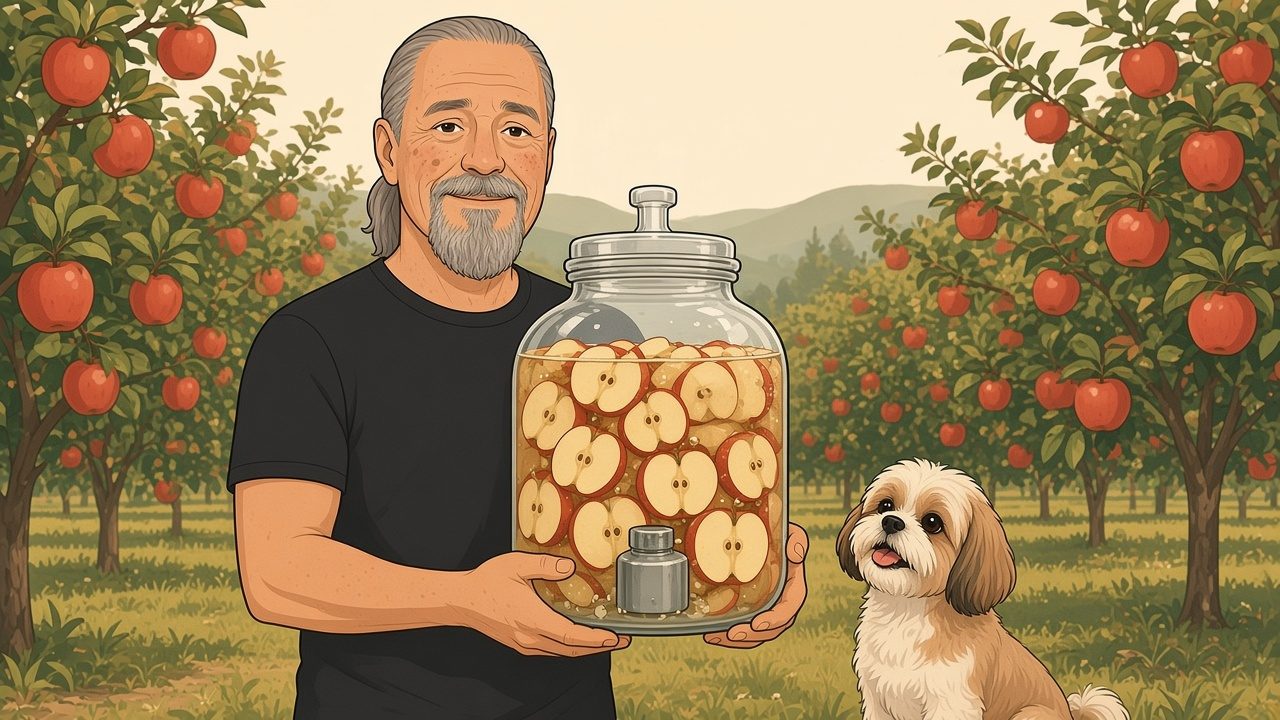
I spent decades writing code, starting back when programs came on punch cards. These days my projects bubble instead of compile. As a diabetic, I got curious about fermented apples for a pretty personal reason: since the good bacteria eat up much of the fruit's natural sugar during fermentation, they're generally gentler on blood sugar than a fresh apple. That got my attention, and the flavor kept it. (Your mileage may vary, so check with your doctor and keep an eye on your own numbers.)
Fermenting apples turns plain old fruit into a tangy, probiotic-packed snack your gut will send thank-you notes for. It's an ancient preservation trick, older than punch cards even, and it lets you keep seasonal apples around for months without canning, freezing, or a single ingredient you can't pronounce.
Here's what you get for your patience:
- Better nutrition. Fermentation makes certain nutrients, like B vitamins, easier for your body to use, and it creates probiotics that help keep your digestion running smoothly.
- Less sugar. The good bacteria snack on the apples' natural sugars while they work, so the finished product hits your blood sugar more gently than a fresh apple does. They do the eating, you get the credit.
- Big, interesting flavor. Expect sweet, sour, and a little fizzy, kind of like apple pie and hard cider had a very well-behaved baby. Toss it in salads, spoon it over desserts, or just eat it straight from the jar. Nobody's judging.
- Natural preservation. Fermentation creates an acidic environment that bad bugs can't stand, so your apples last longer and keep their nutritional value. It's basically a bouncer for your fruit.
I slice the apples and put them in a light salt brine. I usually do 4 apples, which fill a quart jar. Wide mouth helps. The brine is 1 tsp sea salt (best not to use iodized table salt) per quart of water. Iodine is antibacterial and kills the natural yeast if I remember my high school biology correctly. (Although it was a long time ago ...)
You generally don't want to use chlorinated water. The chlorine gets in the way of fermenting. If that's what you have, set some water out on the counter uncovered for 24 hours or so. They tell me enough chlorine will evaporate in that time so you should be good to go. But I'm just going by what other people have said, not because of any research I have done.
For spices, 2 tbs apple pie spice and 8-10 whole cloves. Last time I also added four Star Anise for good measure. You know the family motto: "If a little is good a lot more is better". (I like very strong flavors - YMMV. The wife complains my apples make her eyes water)
I added 1/2 cup ginger bug to jump start the ferment but is not necessarily needed as it will naturally start by itself. Wild yeast and bacteria turn the sugars tangy. After 2 - 5 days the fruit is lightly fizzy, still apple, probiotic but sharper.
To keep from growing foreign yeast/bacteria while fermenting, the apples need to be fully submerged in the brine. Some people use a fermentation weight. I sometimes use a ziploc bag partially filled with water placed on top of the apples to fill the space at the top of the jar.
Use a fermentation lid with airlock if you have one, or even a paper towel across the top held in place with a rubber band. Lets the CO2 escape and keeps the fruit flies out (unless you're looking for extra protein).
I start tasting after 2 days. Once I like it, I refrigerate to stop the ferment. Should last in the fridge for a few months, but they are usually gone in a week or so.
Lucy(fer) wasn't a lot of help on this one. She spent her time more productively barking at the neighbors cat.